Bathrooms
What a cosmetic bathroom makeover can and cannot include
By the Peak Surfaces team · · 6 min read
A cosmetic bathroom makeover refreshes the surfaces you see, such as tiles, grout, silicone, the vanity, the mirror and the hardware, and leaves the plumbing, wiring and waterproofing exactly where they are. It cannot move a toilet, shift a drain, rewire a light or replace the membrane under a shower, because those jobs belong to other trades and usually turn the project into a full renovation. Once you know what sits behind the surfaces, the line between the two is easy to see, and it decides whether a refresh is the right call for your bathroom.
Peak Surfaces does cosmetic bathroom and kitchen makeovers across Melbourne and Victoria from our base in Coolaroo, and we are upfront about the limit: a fresh look without moving plumbing or wiring. If your bathroom needs more than that, we say so at the quote stage, not part-way through the job.
What a cosmetic makeover can include
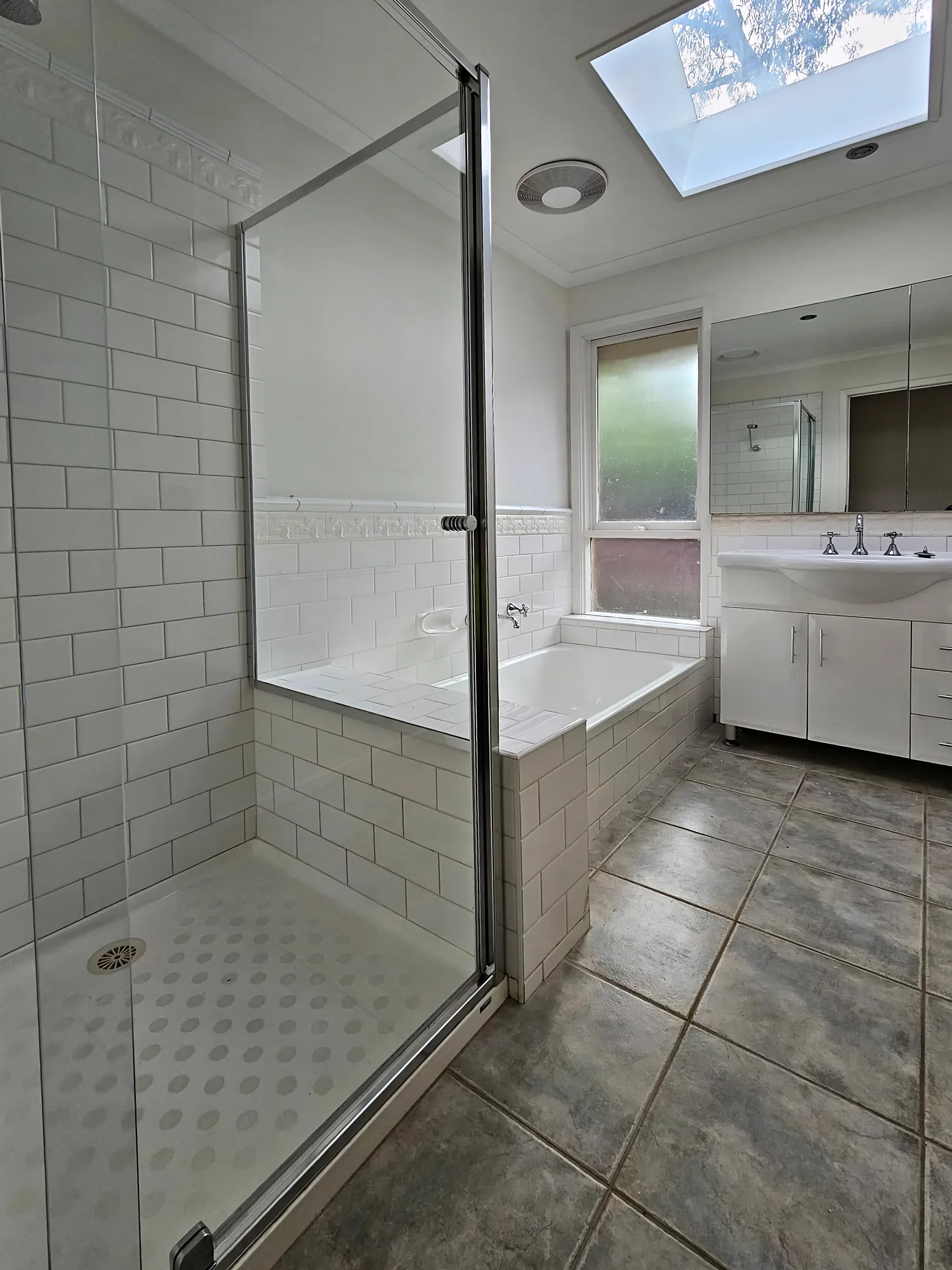
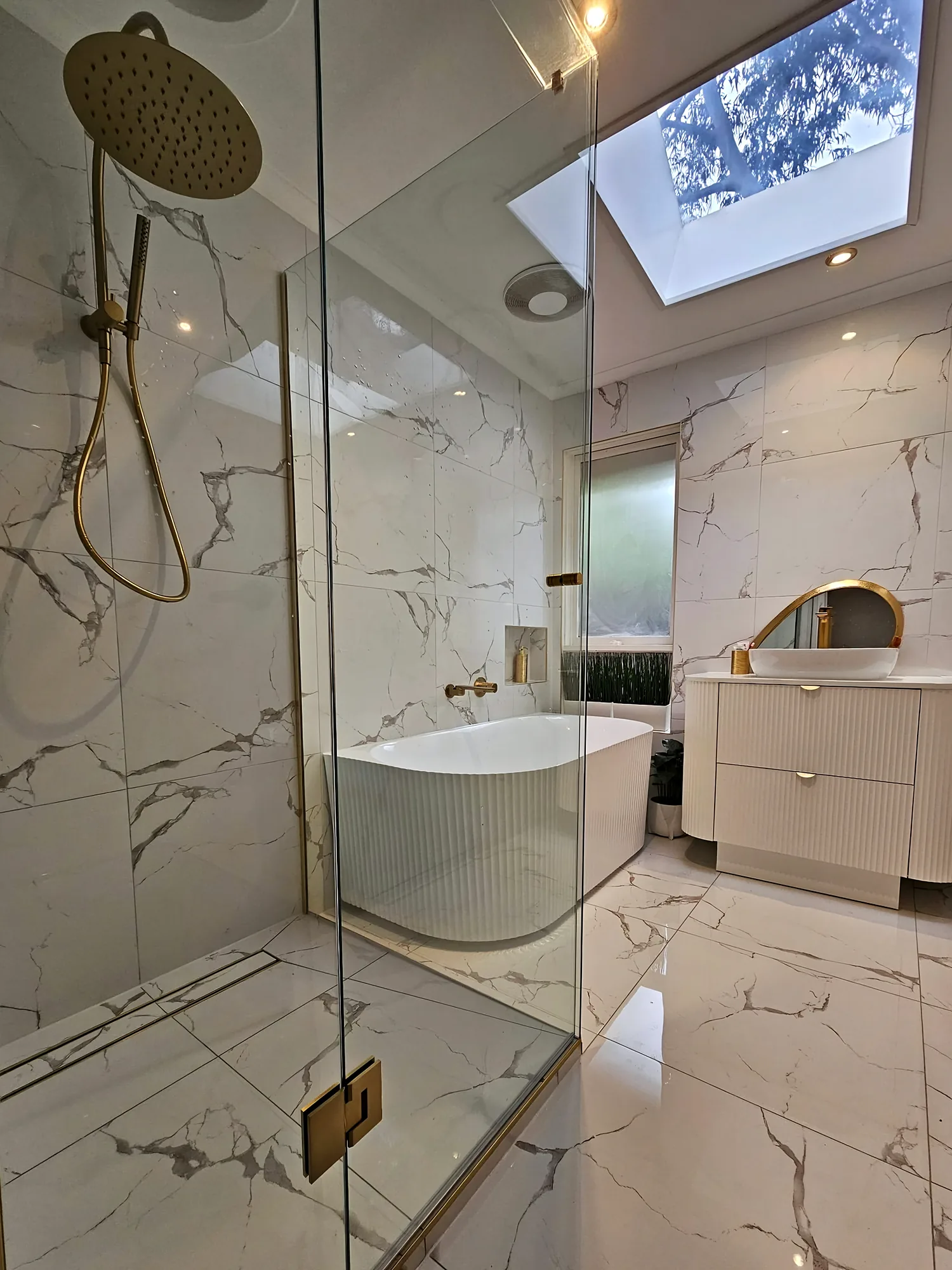
Almost everything a buyer, tenant or guest notices in a bathroom is a surface, and surfaces can be renewed in place. Wall tiles that are firmly bonded but dated in colour are recoated with epoxy tile paint. Grout that has cracked, crumbled or stained is raked out and replaced. The silicone around the bath, shower screen and vanity top is cut out and renewed so the black mould line disappears.
The vanity cupboards and drawer fronts can be resurfaced in two-pack enamel or polyurethane instead of being replaced, the mirror swapped for a larger or framed one, and tired handles and towel rails changed for new. Splashback tiles can go in behind the vanity, and floor tiles can be replaced where the layout stays the same.
- Epoxy tile paint over sound but dated wall tiles
- Deteriorated grout raked out and replaced
- Sanitary silicone cut out and renewed around the bath, screen and vanity
- Vanity doors and drawer fronts resurfaced in two-pack enamel or polyurethane
- Mirrors, handles, towel rails and other non-plumbing fittings replaced
- New splashback or floor tiles laid without moving a single pipe
What a cosmetic makeover cannot include
A cosmetic makeover cannot touch anything that carries water or electricity, and it cannot replace the waterproofing membrane. It also cannot strip a shower floor back to redo that membrane, because once the old tiles come off, waterproofing has to be redone before anything goes back on.
This is not a limit we hide behind; it is the reason a cosmetic makeover is quick and tidy. The moment a pipe or cable moves, the job becomes a renovation with several trades working in sequence.
- Moving a toilet, basin, shower or bath to a new position
- Replacing or reconnecting taps, mixers, cisterns and wastes
- Adding or moving power points, lights, heat lamps or exhaust fans
- Stripping a shower back to replace the waterproof membrane
- Removing walls, changing windows or altering the room's layout
Which trade handles the rest
Plumbing, electrical and waterproofing each belong to a separate licensed or registered trade in Victoria, and the order they work in matters. The plumber and electrician rough in first, the waterproofer applies the membrane to the shower recess and wet-area floor once the substrate is ready, and only after that membrane has cured can new tiles go over it.
If your bathroom needs any of that, the cosmetic work is normally the last step. We are happy to come in once the wet trades have finished and handle the tiling, splashback, vanity finish and hardware, but we do not carry out the plumbing, electrical or waterproofing work ourselves.
- Licensed plumber: taps, mixers, cisterns, wastes, drains and any fixture that moves
- Licensed electrician: power points, lighting, exhaust fans, heat lamps and hard-wired towel rails
- Registered waterproofer: the membrane under shower and wet-area floors and up the walls
- Peak Surfaces: the visible surfaces once those trades are done, from tiles and grout to the vanity finish and hardware
How to tell whether a refresh is enough
A cosmetic refresh is enough when the bathroom is sound but tired: the tiles are firmly bonded, nothing leaks, the layout works and the real problem is colour, grime and worn fittings. Tap a few wall tiles with a knuckle; a hollow sound or any movement means the tile has let go, and paint will not fix that.
A simple test is to ask what you would change if money were no object. If the answer is colour, grout, silicone, the vanity doors and the mirror, a cosmetic makeover covers it. If the answer is a bigger shower, a second basin or the toilet on the other wall, you are describing a renovation.
- Tiles sound solid when tapped and none have cracked through
- Grout and silicone are stained or mouldy but the surfaces behind them are dry
- The vanity carcass is sound and only the doors, top or handles look dated
- There is no staining, swelling or softness in the walls, floor or the ceiling below
Pre-sale, rental or just tired: three common cases
Selling the home is a classic reason for a cosmetic bathroom makeover, because listing photos reward clean white grout and a modern vanity colour far more than they reward new pipework nobody can see. A pre-sale refresh typically covers tile recoating, re-grouting, fresh silicone, a resurfaced vanity and new hardware, finished in days rather than weeks.
For a rental, the brief is durability and low fuss between tenants: hard-wearing finishes, fresh silicone and fittings that are easy to clean. For an owner who is simply tired of a peach or burgundy bathroom from the 1980s, the question is whether the room has another ten years in its tiles; if it does, a makeover buys that time without the dust, noise and disruption of a strip-out.