Pools
Pool repaint or resurface? How to tell what your pool needs
By the Peak Surfaces team · · 6 min read
A repaint is the right call when the pool shell is sound and only its surface has aged: paint that chalks, fades or peels, or a fibreglass gelcoat gone dull. A full resurface, meaning a new pebble, quartz or render interior, is for pools where the finish underneath has failed, with render lifting across large areas, cracks that move or water that will not stay in.
This guide explains the difference between the two jobs, how to read the symptoms from the pool edge and inside the empty shell, and what a proper recoat involves. Peak Surfaces recoats concrete and fibreglass pools with chlorinated rubber, two-pack epoxy and polyurethane; pebble, quartz and render interiors are a pool builder's work, not ours, so when the symptoms point that way we say so.
A recoat and a re-interior are different jobs
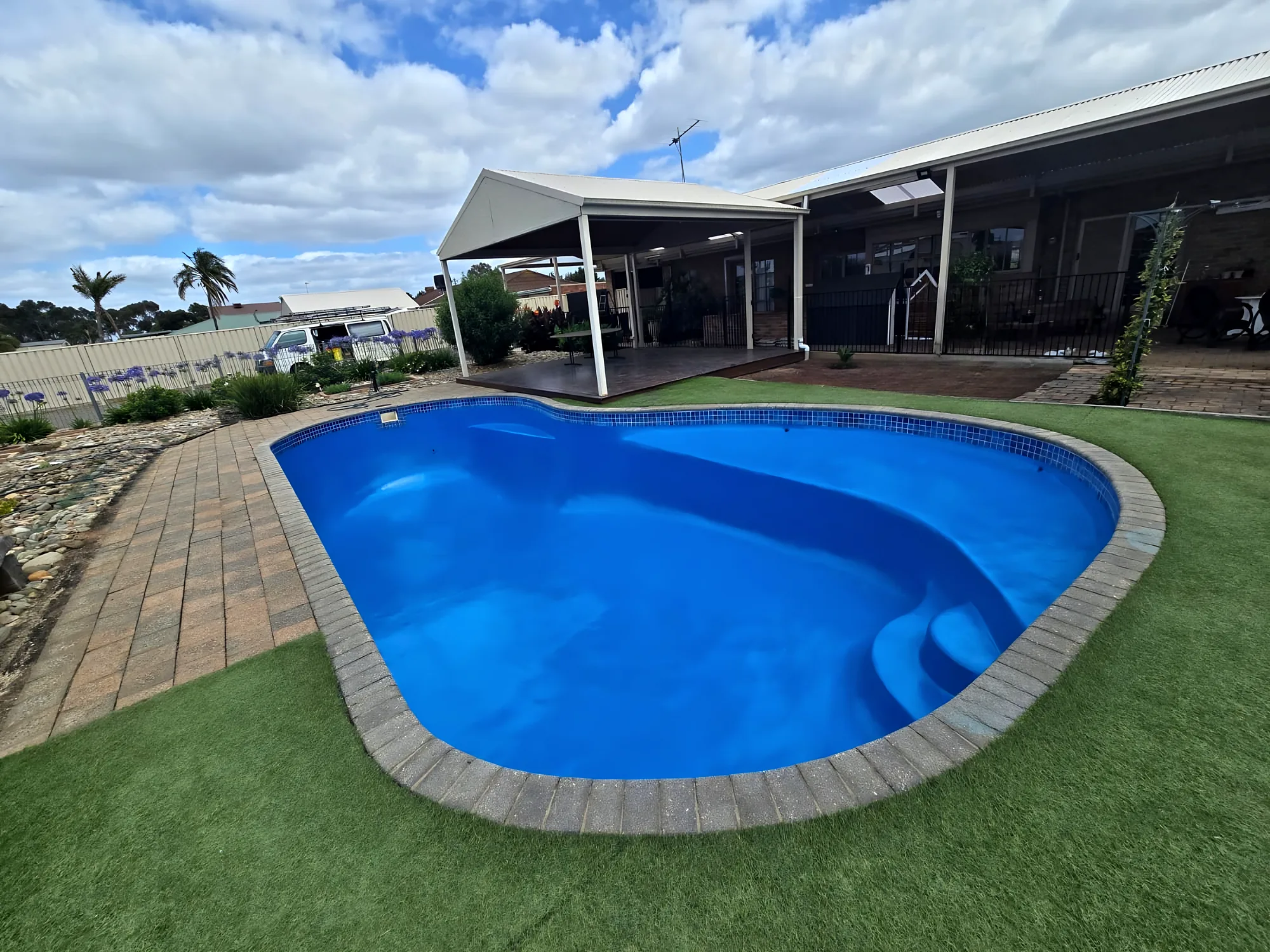
A recoat is a paint film, a fraction of a millimetre thick, bonded to the surface the pool already has. A re-interior strips that surface back to the concrete shell and lays a new finish several millimetres thick, usually pebble, quartz aggregate or cement render. The first is coating work; the second is pool construction. The word resurfacing gets used for both, so ask what is being quoted: our pool resurfacing and painting service is a recoat.
Each coating system has its place. Chlorinated rubber is the traditional single-pack pool paint, simple to recoat with more of the same but the shortest lived. Two-pack epoxy cures to a harder, denser film that typically outlasts it, provided the shell is dry and the old coating is compatible. Polyurethane stays flexible and holds colour in full sun, which suits fibreglass shells that move slightly with temperature.
On a fibreglass pool the gelcoat is the original finish and a recoat goes over it once abraded; rebuilding the gelcoat or the laminate beneath it is specialist fibreglass work.
Reading the symptoms from the pool edge
Most symptoms can be read with the water still in. Surface symptoms mean the coating has worn out; shell symptoms mean something beneath it has moved.
- Chalking: a pale powder that rubs onto hands and swimmers, left when sun and chlorine break down the binder in the paint. The most common reason to recoat.
- Fading and blotching: colour gone pale and patchy, worst in the shallow end and on the steps where UV is strongest. Cosmetic, and fixed by a recoat.
- Flaking and peeling: paint lifting in sheets or curling at the waterline, usually from poor preparation or a new system over an incompatible old one. Still a recoat, but after a full strip.
- Blisters: in paint, small bubbles of trapped solvent or moisture that go with the old coating. In a fibreglass gelcoat, isolated bumps below the waterline are osmosis blisters, repairable if there are only a few.
- Water loss: if the level drops faster than evaporation, the problem is a leak, and no coating fixes a leak.
What the empty shell tells you
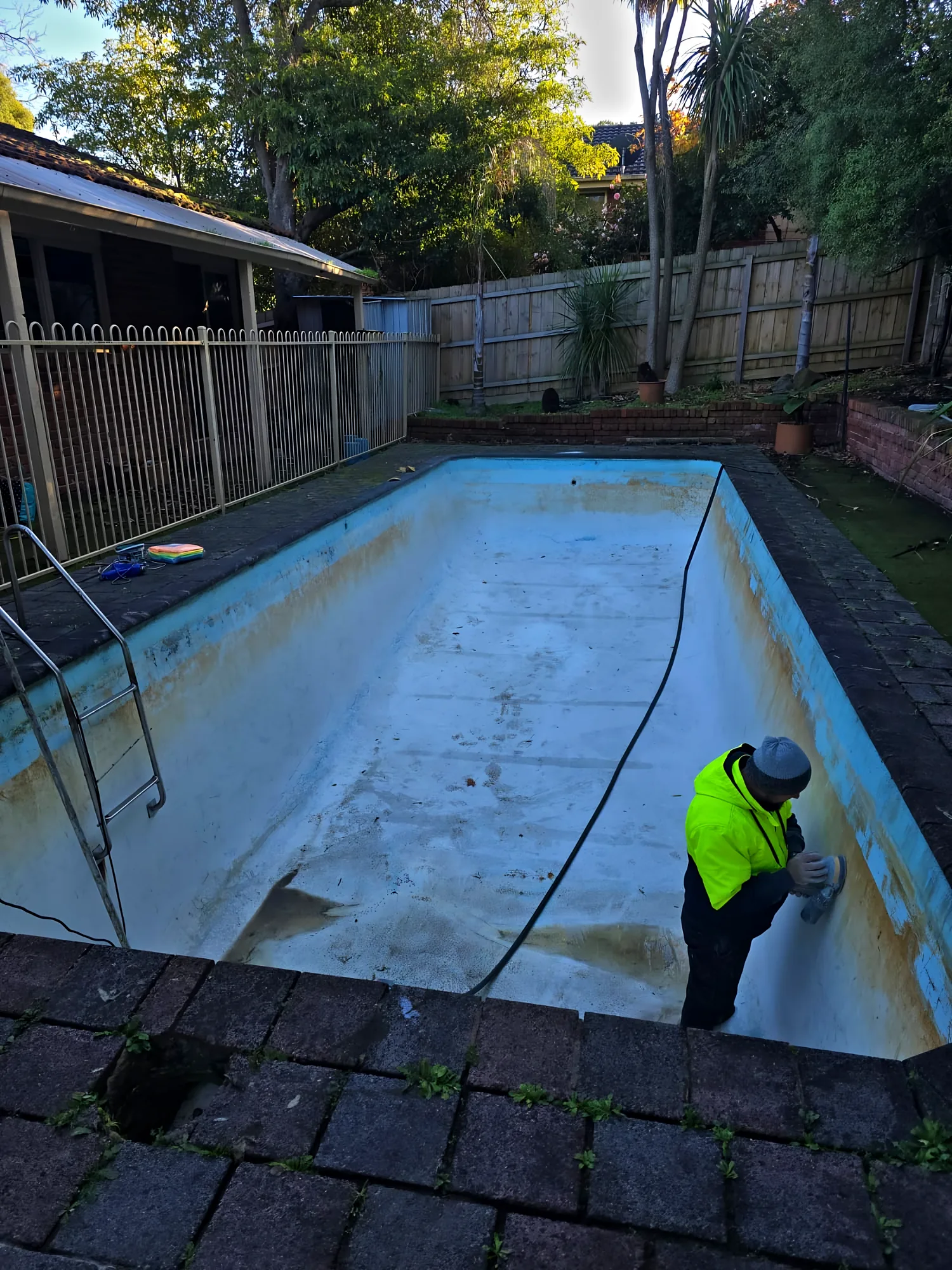
The drained shell is where the decision is made. Tapping rendered concrete with a knuckle or screwdriver handle sorts firm render from drummy render: a solid note means it is bonded, a hollow note means it has let go of the concrete behind it. Scattered hollow patches are cut out and refilled before painting; hollow render across most of the shell is a re-interior.
Cracks are read by depth and movement. Fine crazing in the render or old paint, with level edges and the pool holding water, is a surface crack, opened, filled and feathered before coating. A crack that runs through the shell, has one edge higher than the other, returns after patching or lines up with a soggy patch of lawn is structural and needs a pool builder or leak detection specialist first.
On fibreglass, look for soft or spongy areas, cracks fanning out from steps and fittings, and blisters in clusters rather than ones and twos. Isolated blisters and crazing are cosmetic repairs; widespread blistering, delamination or a bulging floor need a fibreglass specialist.
When a coating is the right call, and when it is not
A coating is the right call when the shell holds water, the render answers a tap with a solid note, the defects are shallow and scattered, and the finish is tired rather than failed, or when you simply want a different blue.
A coating can go over some aggregate interiors, but it keeps the pitted texture, holds dirt and wears first on the high points, so a worn pebble finish is typically better rebuilt than painted. A pool builder or interior specialist is the right call when:
- The pool loses water beyond evaporation, confirmed with a bucket test.
- Render sounds hollow over large areas or has fallen away to expose concrete.
- A crack has shifted, reopened after repair or runs right through the shell.
- A pebble or quartz interior has worn down to the cement and aggregate is coming loose.
- A fibreglass shell is bulging, cracked across the floor or blistered from end to end.
What a proper recoat involves
A proper recoat is mostly preparation, with the painting at the end. The pool is drained to the sewer, never the stormwater drain, after checking the ground around it is not waterlogged, because groundwater can push an empty shell upward. A solvent test identifies the old coating, since new paint must match it or the old film must come off.
Repairs come next, then the cleaning sequence: a degrease for sunscreen and body oils, an acid wash to dissolve calcium scale and open the pores of concrete or render, scarifying or abrasive etching to key sound old paint or gelcoat, and a neutralising rinse. The shell then dries right through, typically several days and longer in cool, damp weather, because all three systems lift off damp concrete.
Only then does primer go on where the system calls for it, followed by two full coats worked around steps, benches and ledges. The pool stays empty through its cure, typically five to ten days depending on system and weather, then is refilled in one go and balanced before anyone swims.